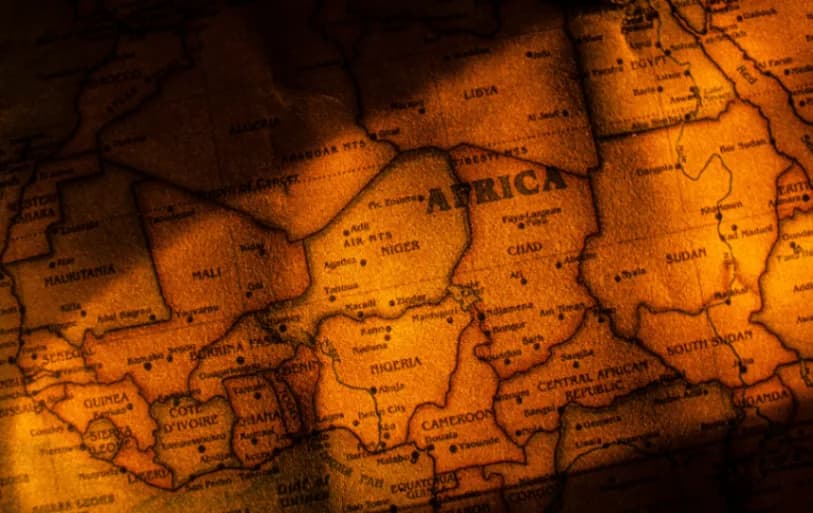
THE GULF OF GUINEA:
WHERE HISTORY, TRADE, AND OPPORTUNITY MEET
The Gulf of Guinea is more than a body of water, it is a living story. A place where ancient trade routes met modern shipping lanes, where cultures blended, where fortunes were made and lost, and where nations today stand on the edge of massive maritime opportunity.
For centuries, the Gulf has shaped the destiny of West and Central Africa. Today, it remains one of the most important maritime zones in the world, carrying global oil, gas, and cargo traffic. Yet beneath the surface lies something bigger, a region full of untapped potential for marine companies, shipbuilding yards, logistics operators, and the entire blue-economy ecosystem.
This is the story of how the Gulf of Guinea became what it is… and why its future could redefine Africa’s maritime power.
Long before modern maps and satellite charts, West African sailors navigated a vast stretch of ocean that Europeans would later call the Gulf of Guinea, a name that has echoed through centuries of trade, conflict, exploration, and opportunity.
Stretching from Senegal to Angola, the Gulf of Guinea has been a crossroads of commerce, culture and conflict for centuries.
Today it remains one of the world’s most strategically important maritime zones, a major oil and gas basin, a busy corridor for global shipping, and a region full of untapped opportunities for local marine industries.
Why Is It Called the Gulf of Guinea?
The name “Guinea” dates back to medieval North African traders.
It came from the Berber word “Akal n-Ghinawen”, meaning “land of the black people.”
When Portuguese explorers arrived in the 15th century, they adopted a version of the term, “Guiné”, to describe the entire West African coast below the Sahara.
As European powers carved up territories, the name remained, marking a region rich in people, culture, and resources.
And as nations formed and coastlines took shape, the vast stretch of Atlantic waters hugging West and Central Africa became known as the Gulf of Guinea.
The Gulf of Guinea, therefore, is not just a geographical location.
It is a name layered with history, a reminder of Africa’s first interactions with global trade and maritime exploration.
From gold and ivory routes…
to palm oil and spices…
to today’s oil, LNG, and container shipping…
the Gulf has always been a meeting point for global trade.
THE ECONOMIC IMPORTANCE OF THE GULF OF GUINEA
The Gulf is not just important, it is strategic.
1. A Critical Shipping Corridor
The Gulf of Guinea is more than a stretch of water on the map, it is one of the most important shipping corridors on the African continent. Every year, thousands of vessels cut across its waters, carrying the lifeblood of regional and international trade. Tankers, container ships, gas carriers, and bulk vessels all rely on this route to move goods between Africa, Europe, Asia, and the Americas.
From oil and gas extracted in Nigeria and Angola, to cocoa and agricultural exports from Ghana and Côte d’Ivoire, to manufactured goods and machinery arriving from Asia, the Gulf of Guinea facilitates a flow of commerce worth billions of dollars. It is also a major route for Liquefied Natural Gas (LNG) and the export of minerals and raw materials essential to global industries.
Strategically located ports such as Lagos, Abidjan, Tema, Lomé, Douala, Luanda, and Port Harcourt serve as the region’s commercial gateways. These ports do not only receive goods; they power entire economies by enabling import-export activities, supporting manufacturing, and fostering jobs across logistics, shipping, and supply-chain services.
The Gulf of Guinea’s role as a shipping corridor is therefore not accidental — it is a function of geography, economic necessity, and the region’s central place in African maritime trade. For any nation or business hoping to engage with West and Central Africa, this corridor is not just important… it is indispensable.
2. Energy Powerhouse of Africa
The Gulf of Guinea is not just a maritime zone, it is one of Africa’s largest engines of energy production. This region holds some of the most significant offshore oil and gas reserves on the continent, with countries like Nigeria, Angola, Equatorial Guinea, and Ghana depending heavily on offshore platforms to power their economies.
Every day, dozens of offshore fields operate miles from the coast, requiring a constant flow of marine support services to keep production running. This has created one of the most stable and long-term markets for vessel operators and marine service companies in Africa.
As offshore exploration deepens and older fields shift into maintenance mode, demand continues to rise for:
Crew Boats:
Essential for transporting engineers, technicians, and workers to offshore platforms.
Patrol Vessels:
Used for security, asset protection, and anti-piracy operations around offshore facilities.
Offshore Supply Vessels (OSVs):
The backbone of offshore logistics, moving fuel, equipment, drilling materials, and cargo.
Diving and ROV Services:
Needed for underwater inspections, repairs, wellhead assessments, and pipeline monitoring.
Marine Logistics & Maintenance:
From bunkering to towing, waste removal, repair operations, and emergency response.
In short, the Gulf of Guinea’s offshore energy sector is a living ecosystem, one that relies on efficient, safe, and reliable marine operations. As production technologies evolve and new fields are discovered, the region remains a massive opportunity for marine companies ready to support Africa’s expanding energy frontier.
3. A Region under Watch, Security & Piracy
For over a decade, the Gulf of Guinea carried a heavy reputation as the world’s piracy epicenter. At its peak, the region accounted for almost 40% of global piracy incidents, with kidnappings, armed robbery, and hijackings disrupting trade and pushing shipping insurance premiums to record highs.
Tankers, bulk carriers, fishing vessels, and even offshore support ships were frequent targets, creating an environment of uncertainty for ship-owners and investors.
But the narrative is changing.
Today, the Gulf of Guinea is experiencing one of its most significant security turnarounds in recent history. Thanks to coordinated efforts among regional governments, navies, and international partners, the waters are becoming safer and more predictable for maritime business.
Key improvements shaping the new security landscape include:
· Joint regional naval patrols under frameworks like the Yaoundé Architecture
· Advanced surveillance systems, maritime domain awareness centers, and satellite tracking
· Better coordination between coastal states, leading to faster incident response
· Partnerships with private security companies supporting offshore operations
These developments have led to a sharp decline in major piracy incidents, restoring confidence among shipping companies and offshore operators.
As stability increases, so do the opportunities. Safer waters mean:
· More vessel traffic
· Expanded offshore activities
· Higher demand for security boats and escort services
· A more favorable investment climate for marine companies
The Gulf of Guinea is steadily transitioning from a piracy hotspot to a secure, strategic maritime corridor, opening new doors for growth in shipping, oil and gas support, and marine logistics.
Trade Routes: The Lifelines of the Gulf
The Gulf of Guinea is more than a body of water, it’s one of the world’s maritime crossroads. Its routes link West and Central Africa directly to Europe, North America, South America, and even Asia through major trans-Atlantic connections.
Every day, ships carrying everything from crude oil to cocoa, LNG, cars, machinery, and food products move through this corridor, making it one of the busiest stretches of ocean on the continent.
These trade routes are the arteries that keep economies alive. And wherever vessels move, opportunities follow, in shipping, logistics, bunkering, marine services, security, and offshore support.
In the Gulf of Guinea, trade doesn’t just pass through: it creates possibilities.
Challenges [and How They Shape Maritime Opportunities]
The Gulf of Guinea is Africa’s maritime heartbeat, yet it faces challenges that slow its full potential. Most vessels operating here still travel to Europe, Asia, or the Middle East for repairs, costing millions in foreign exchange and causing long downtimes. This gap, however, highlights a massive opportunity: modern local shipyards, floating maintenance facilities, and repair docks could capture this market and keep revenue circulating within the region.
Skills and technology remain a key hurdle. There is a shortage of naval architects, marine engineers, welders, fabricators, and offshore technicians, which limits the ability to build and maintain vessels efficiently. For entrepreneurs and investors, this represents a clear opening for training academies, apprenticeships, and tech transfer partnerships, turning a challenge into a thriving sector for talent development and innovation.
Weak maritime infrastructure and inconsistent policies add another layer of complexity. Many ports still lack deepwater repair facilities, heavy-duty cranes, and fabrication yards, while regulatory uncertainty and limited financing slow private investment. Yet, these barriers point directly to where the next wave of opportunity lies. With the right policy reforms, funding mechanisms, and infrastructure investment, the Gulf of Guinea could quickly evolve into a world-class maritime hub, and the companies bold enough to act now will lead the transformation.
Opportunity in Every Challenge
Each of these issues represents a market waiting to be transformed.
Where there are gaps, there is room for builders.
And in the Gulf of Guinea, the companies bold enough to step in will define the region’s maritime future.
THE OPPORTUNITIES: WHERE THE FUTURE IS HEADING
The Gulf of Guinea is entering one of its most promising maritime eras. As offshore oil and gas operations expand, the need for local ship repair, quick maintenance services, and specialized vessels is rapidly increasing. Demand is rising for OSVs, security boats, survey vessels, tugboats, barges, and crew transport vessels, creating new opportunities for shipyards, marine engineers, and logistics companies across the region.
At the same time, indigenous maritime businesses are stepping up with innovation and determination, proving that the future of the Gulf will increasingly be built by local hands.
Beyond oil, the region is opening into a broader blue economy filled with opportunities in marine tourism, aquaculture, coastal shipping, environmental ocean services, and renewable ocean energy.
With the right investment and policy support, countries like Nigeria, Ghana, and Côte d’Ivoire can become major repair and marine-service hubs for West and Central Africa. The potential is huge, and those who move early will be the ones to shape the future.
The Future Belongs to Those Who Build It
The Gulf of Guinea is not a story of lost potential, it is a story still being written. Its waters are rich, trade routes are alive, and the demand for maritime services is growing. What is missing is bold action and investment from governments, private companies, and young entrepreneurs ready to seize the moment.
Just like Tosin, the boy who watched ships, the region does not need to wait for foreign solutions. The Gulf of Guinea has the resources, talent, and vision to build its own maritime future, and so do the nations, the emerging companies, and the people daring enough to innovate. The opportunity is here; the time to act is now.
WHERE HISTORY, TRADE, AND OPPORTUNITY MEET
The Gulf of Guinea is more than a body of water, it is a living story. A place where ancient trade routes met modern shipping lanes, where cultures blended, where fortunes were made and lost, and where nations today stand on the edge of massive maritime opportunity.
For centuries, the Gulf has shaped the destiny of West and Central Africa. Today, it remains one of the most important maritime zones in the world, carrying global oil, gas, and cargo traffic. Yet beneath the surface lies something bigger, a region full of untapped potential for marine companies, shipbuilding yards, logistics operators, and the entire blue-economy ecosystem.
This is the story of how the Gulf of Guinea became what it is… and why its future could redefine Africa’s maritime power.
Long before modern maps and satellite charts, West African sailors navigated a vast stretch of ocean that Europeans would later call the Gulf of Guinea, a name that has echoed through centuries of trade, conflict, exploration, and opportunity.
Stretching from Senegal to Angola, the Gulf of Guinea has been a crossroads of commerce, culture and conflict for centuries.
Today it remains one of the world’s most strategically important maritime zones, a major oil and gas basin, a busy corridor for global shipping, and a region full of untapped opportunities for local marine industries.
Why Is It Called the Gulf of Guinea?
The name “Guinea” dates back to medieval North African traders.
It came from the Berber word “Akal n-Ghinawen”, meaning “land of the black people.”
When Portuguese explorers arrived in the 15th century, they adopted a version of the term, “Guiné”, to describe the entire West African coast below the Sahara.
As European powers carved up territories, the name remained, marking a region rich in people, culture, and resources.
And as nations formed and coastlines took shape, the vast stretch of Atlantic waters hugging West and Central Africa became known as the Gulf of Guinea.
The Gulf of Guinea, therefore, is not just a geographical location.
It is a name layered with history, a reminder of Africa’s first interactions with global trade and maritime exploration.
From gold and ivory routes…
to palm oil and spices…
to today’s oil, LNG, and container shipping…
the Gulf has always been a meeting point for global trade.
THE ECONOMIC IMPORTANCE OF THE GULF OF GUINEA
The Gulf is not just important, it is strategic.
1. A Critical Shipping Corridor
The Gulf of Guinea is more than a stretch of water on the map, it is one of the most important shipping corridors on the African continent. Every year, thousands of vessels cut across its waters, carrying the lifeblood of regional and international trade. Tankers, container ships, gas carriers, and bulk vessels all rely on this route to move goods between Africa, Europe, Asia, and the Americas.
From oil and gas extracted in Nigeria and Angola, to cocoa and agricultural exports from Ghana and Côte d’Ivoire, to manufactured goods and machinery arriving from Asia, the Gulf of Guinea facilitates a flow of commerce worth billions of dollars. It is also a major route for Liquefied Natural Gas (LNG) and the export of minerals and raw materials essential to global industries.
Strategically located ports such as Lagos, Abidjan, Tema, Lomé, Douala, Luanda, and Port Harcourt serve as the region’s commercial gateways. These ports do not only receive goods; they power entire economies by enabling import-export activities, supporting manufacturing, and fostering jobs across logistics, shipping, and supply-chain services.
The Gulf of Guinea’s role as a shipping corridor is therefore not accidental — it is a function of geography, economic necessity, and the region’s central place in African maritime trade. For any nation or business hoping to engage with West and Central Africa, this corridor is not just important… it is indispensable.
2. Energy Powerhouse of Africa
The Gulf of Guinea is not just a maritime zone, it is one of Africa’s largest engines of energy production. This region holds some of the most significant offshore oil and gas reserves on the continent, with countries like Nigeria, Angola, Equatorial Guinea, and Ghana depending heavily on offshore platforms to power their economies.
Every day, dozens of offshore fields operate miles from the coast, requiring a constant flow of marine support services to keep production running. This has created one of the most stable and long-term markets for vessel operators and marine service companies in Africa.
As offshore exploration deepens and older fields shift into maintenance mode, demand continues to rise for:
Crew Boats:
Essential for transporting engineers, technicians, and workers to offshore platforms.
Patrol Vessels:
Used for security, asset protection, and anti-piracy operations around offshore facilities.
Offshore Supply Vessels (OSVs):
The backbone of offshore logistics, moving fuel, equipment, drilling materials, and cargo.
Diving and ROV Services:
Needed for underwater inspections, repairs, wellhead assessments, and pipeline monitoring.
Marine Logistics & Maintenance:
From bunkering to towing, waste removal, repair operations, and emergency response.
In short, the Gulf of Guinea’s offshore energy sector is a living ecosystem, one that relies on efficient, safe, and reliable marine operations. As production technologies evolve and new fields are discovered, the region remains a massive opportunity for marine companies ready to support Africa’s expanding energy frontier.
3. A Region under Watch, Security & Piracy
For over a decade, the Gulf of Guinea carried a heavy reputation as the world’s piracy epicenter. At its peak, the region accounted for almost 40% of global piracy incidents, with kidnappings, armed robbery, and hijackings disrupting trade and pushing shipping insurance premiums to record highs.
Tankers, bulk carriers, fishing vessels, and even offshore support ships were frequent targets, creating an environment of uncertainty for ship-owners and investors.
But the narrative is changing.
Today, the Gulf of Guinea is experiencing one of its most significant security turnarounds in recent history. Thanks to coordinated efforts among regional governments, navies, and international partners, the waters are becoming safer and more predictable for maritime business.
Key improvements shaping the new security landscape include:
· Joint regional naval patrols under frameworks like the Yaoundé Architecture
· Advanced surveillance systems, maritime domain awareness centers, and satellite tracking
· Better coordination between coastal states, leading to faster incident response
· Partnerships with private security companies supporting offshore operations
These developments have led to a sharp decline in major piracy incidents, restoring confidence among shipping companies and offshore operators.
As stability increases, so do the opportunities. Safer waters mean:
· More vessel traffic
· Expanded offshore activities
· Higher demand for security boats and escort services
· A more favorable investment climate for marine companies
The Gulf of Guinea is steadily transitioning from a piracy hotspot to a secure, strategic maritime corridor, opening new doors for growth in shipping, oil and gas support, and marine logistics.
Trade Routes: The Lifelines of the Gulf
The Gulf of Guinea is more than a body of water, it’s one of the world’s maritime crossroads. Its routes link West and Central Africa directly to Europe, North America, South America, and even Asia through major trans-Atlantic connections.
Every day, ships carrying everything from crude oil to cocoa, LNG, cars, machinery, and food products move through this corridor, making it one of the busiest stretches of ocean on the continent.
These trade routes are the arteries that keep economies alive. And wherever vessels move, opportunities follow, in shipping, logistics, bunkering, marine services, security, and offshore support.
In the Gulf of Guinea, trade doesn’t just pass through: it creates possibilities.
Challenges [and How They Shape Maritime Opportunities]
The Gulf of Guinea is Africa’s maritime heartbeat, yet it faces challenges that slow its full potential. Most vessels operating here still travel to Europe, Asia, or the Middle East for repairs, costing millions in foreign exchange and causing long downtimes. This gap, however, highlights a massive opportunity: modern local shipyards, floating maintenance facilities, and repair docks could capture this market and keep revenue circulating within the region.
Skills and technology remain a key hurdle. There is a shortage of naval architects, marine engineers, welders, fabricators, and offshore technicians, which limits the ability to build and maintain vessels efficiently. For entrepreneurs and investors, this represents a clear opening for training academies, apprenticeships, and tech transfer partnerships, turning a challenge into a thriving sector for talent development and innovation.
Weak maritime infrastructure and inconsistent policies add another layer of complexity. Many ports still lack deepwater repair facilities, heavy-duty cranes, and fabrication yards, while regulatory uncertainty and limited financing slow private investment. Yet, these barriers point directly to where the next wave of opportunity lies. With the right policy reforms, funding mechanisms, and infrastructure investment, the Gulf of Guinea could quickly evolve into a world-class maritime hub, and the companies bold enough to act now will lead the transformation.
Opportunity in Every Challenge
Each of these issues represents a market waiting to be transformed.
Where there are gaps, there is room for builders.
And in the Gulf of Guinea, the companies bold enough to step in will define the region’s maritime future.
THE OPPORTUNITIES: WHERE THE FUTURE IS HEADING
The Gulf of Guinea is entering one of its most promising maritime eras. As offshore oil and gas operations expand, the need for local ship repair, quick maintenance services, and specialized vessels is rapidly increasing. Demand is rising for OSVs, security boats, survey vessels, tugboats, barges, and crew transport vessels, creating new opportunities for shipyards, marine engineers, and logistics companies across the region.
At the same time, indigenous maritime businesses are stepping up with innovation and determination, proving that the future of the Gulf will increasingly be built by local hands.
Beyond oil, the region is opening into a broader blue economy filled with opportunities in marine tourism, aquaculture, coastal shipping, environmental ocean services, and renewable ocean energy.
With the right investment and policy support, countries like Nigeria, Ghana, and Côte d’Ivoire can become major repair and marine-service hubs for West and Central Africa. The potential is huge, and those who move early will be the ones to shape the future.
The Future Belongs to Those Who Build It
The Gulf of Guinea is not a story of lost potential, it is a story still being written. Its waters are rich, trade routes are alive, and the demand for maritime services is growing. What is missing is bold action and investment from governments, private companies, and young entrepreneurs ready to seize the moment.
Just like Tosin, the boy who watched ships, the region does not need to wait for foreign solutions. The Gulf of Guinea has the resources, talent, and vision to build its own maritime future, and so do the nations, the emerging companies, and the people daring enough to innovate. The opportunity is here; the time to act is now.
Add us to your mails
Get our emails to stay in the know on offers & updates
Copyright © 2026 Shipmarketsquare | All Rights Reserved | Terms | Privacy Policy